
Starting with the place.
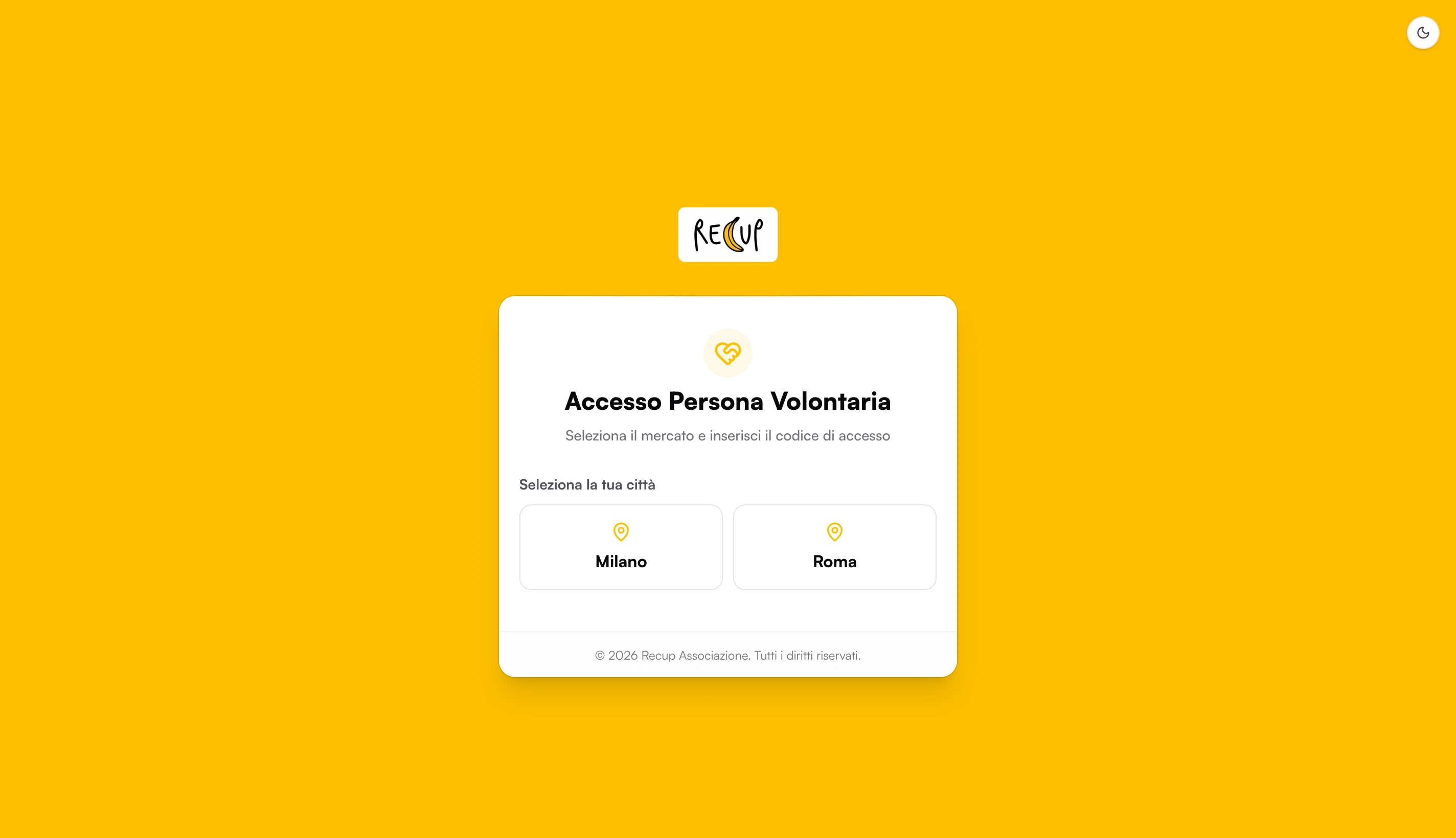
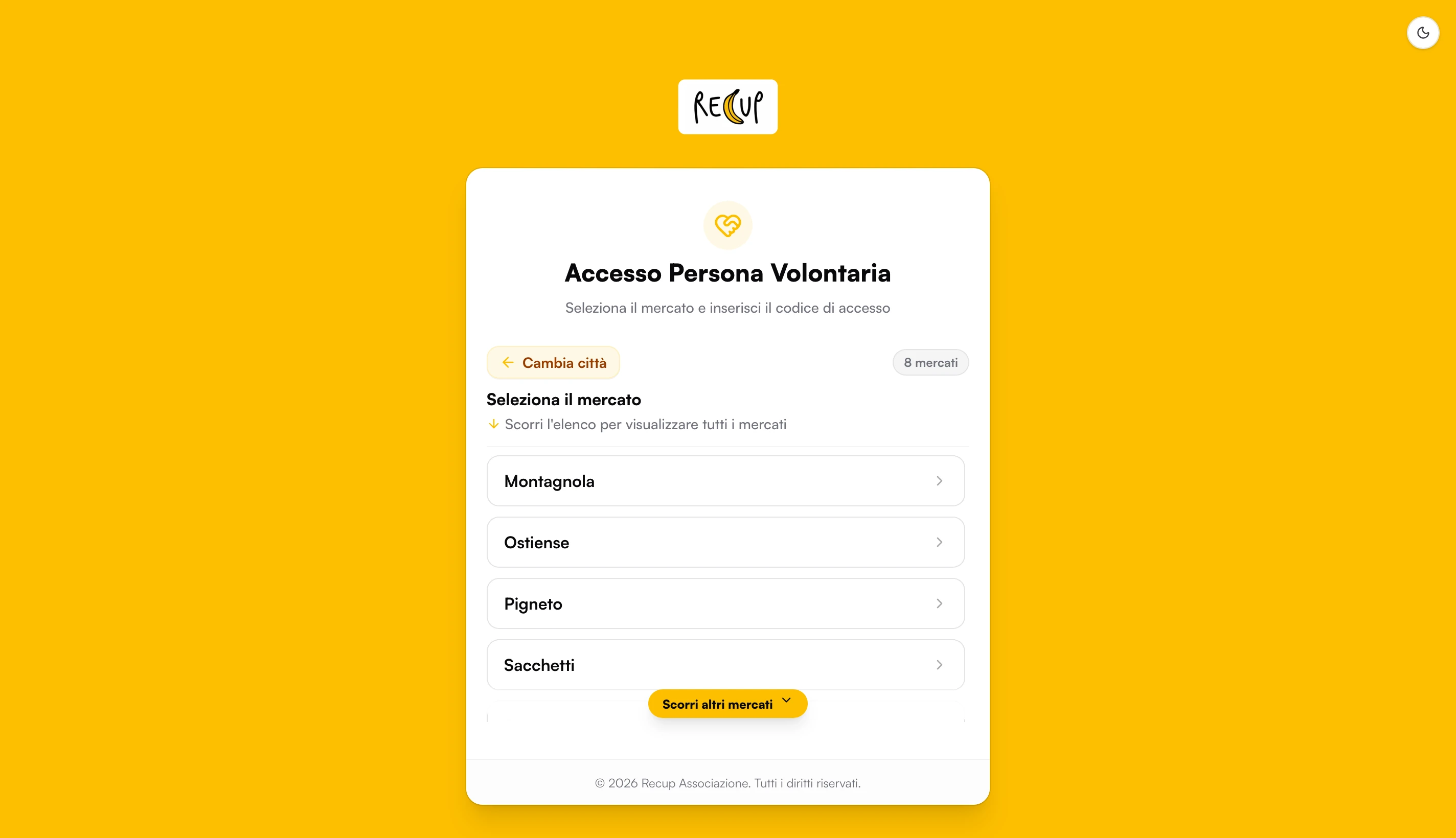
The volunteer portal begins with the city. The route into the tool follows the way RECUP’s activities are organised: people meet in a place, at a market, to recover food together.
Web app · Social impact
Software for the people who give food a second chance.
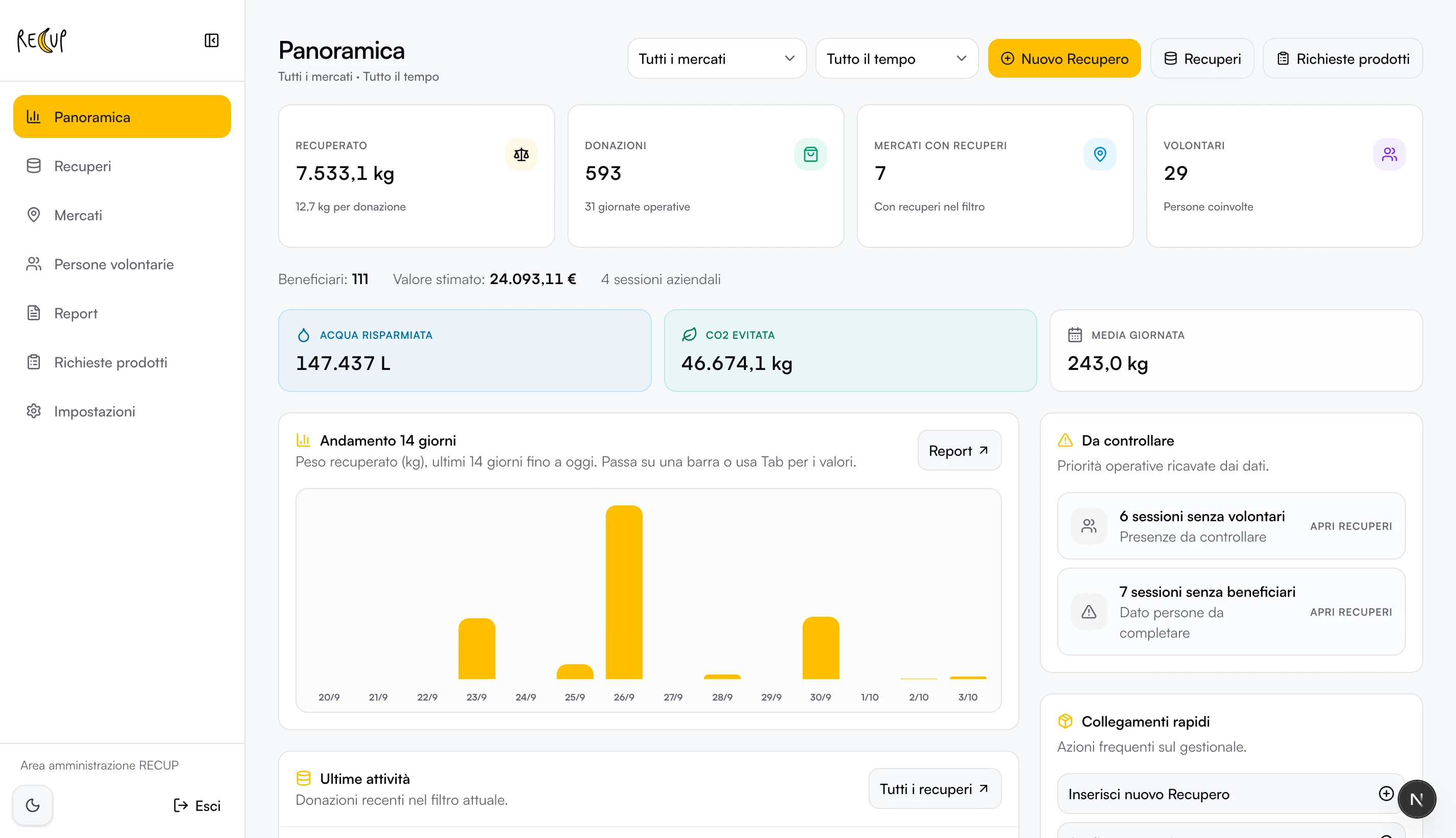
RECUP recovers unsold food from markets and redistributes it free of charge. Food that has lost its economic value becomes an opportunity to share, meet and take part. Its environmental impact and its social value belong to the same everyday activity.
I already knew RECUP by name and through its social impact in Milan and Rome. The collaboration began through Marsilea: someone I had worked with there was also involved in RECUP and, following a good experience together, recommended me for this project. That introduction brought us into contact.
The association had a management platform that no longer met its needs and had gradually been abandoned. Recovery data was also collected through Google Forms and a small software tool. A food name entered in the plural could differ from the database entry; a volunteer’s name could be misspelled or written differently, and quantities could contain typing errors. These small inconsistencies made filtering, cleaning and calculating useful indicators difficult. We decided to rebuild the platform around the way the association actually works.
We agreed to start with an MVP focused on three essentials: the food name, kilograms recovered and volunteers present. That first version made the proposal concrete so we could assess it together. After a period of evaluation, the association chose to continue. The scope then grew to connect foods with their impact indicators and include volunteers, corporate volunteers, associations and guests who were not registered. Beta testing helped us refine the platform before introducing it into the markets.
I chose Next.js and Supabase because they were technologies I knew and felt comfortable working with. They let me move quickly and fit well with AI-assisted development tools. The platform, built with TypeScript, connects two views of the same work: a portal for volunteers to record recovered food and the people present, and a private administration area to manage activities, review data and prepare reports.
Recording the food is only the beginning. The platform brings together recovered weight, participation and environmental indicators, including estimates of water saved and CO₂ emissions avoided. The numbers help make visible both the resources preserved and the people who make each recovery possible.
The calculations for water saved, CO₂ emissions avoided and estimated economic savings were developed by RECUP with researchers at the University of Milan. My role was to implement the method supplied by the association in the platform. I also proposed other databases, but together we chose to keep this approach for the current version.
Organised data changes how the association can see and explain its work. Recoveries that were previously scattered across individual entries become a shared overview of its activities and impact. For me, the value is in making that everyday work easier to understand, report and improve.
As of October 2026, the platform is being introduced into the markets. The association’s feedback has been positive, and we are continuing to fix issues and improve the workflows as they are used in everyday activity. Building it is an ongoing collaboration: real use tells us what needs refining next.
I work directly with the association’s administrators to gather requests and define new features. Market administrators provide feedback from everyday use. These conversations connect the association’s overall needs with what happens when someone actually records a recovery.
The hardest part has been turning real needs into practical software. A request is not always fully defined at the start, and explaining possibilities, constraints and different workflows takes work on both sides. Sometimes a proposed solution only becomes clear after we explore another route and return to the original idea. That can be frustrating, but it has taught me to listen more carefully, make proposals concrete and give people time to understand how a feature would fit their work.
The social impact of technology is one of the things that interests me most. Working with RECUP means meeting people who care deeply about sustainability and inclusion, with experiences and perspectives I find fascinating. It is a project I care about because the software supports something that matters to me, alongside people I enjoy learning from.
The volunteer portal begins with the city. The route into the tool follows the way RECUP’s activities are organised: people meet in a place, at a market, to recover food together.
Choosing the market gives each entry its context. The portal is designed for volunteers, with access tied to the market; the private administration area brings the different activities together.
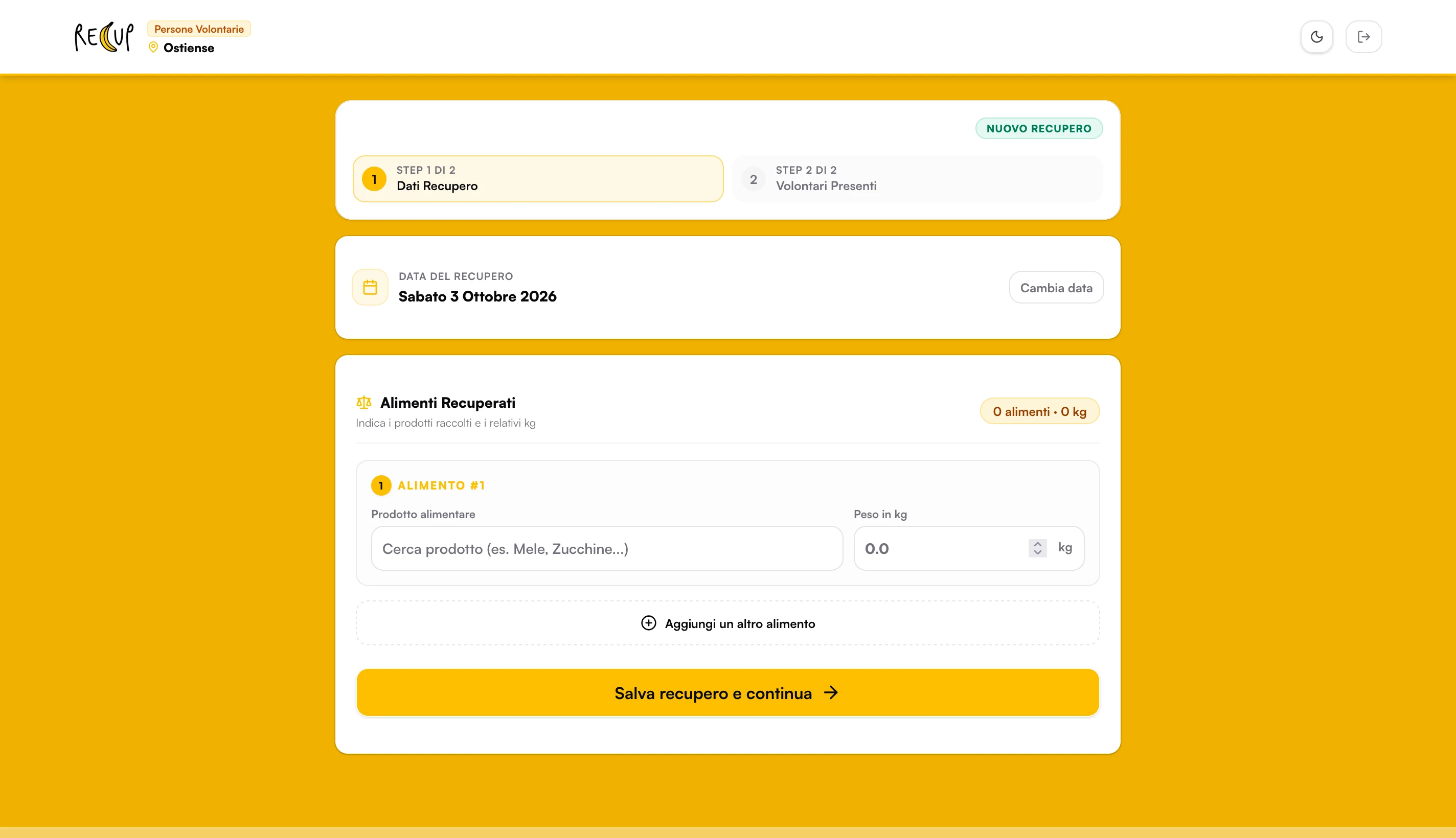
Volunteers record the date, the foods recovered and their weight. A recovery becomes a set of usable data, while the form keeps the focus on the activity happening at the market.
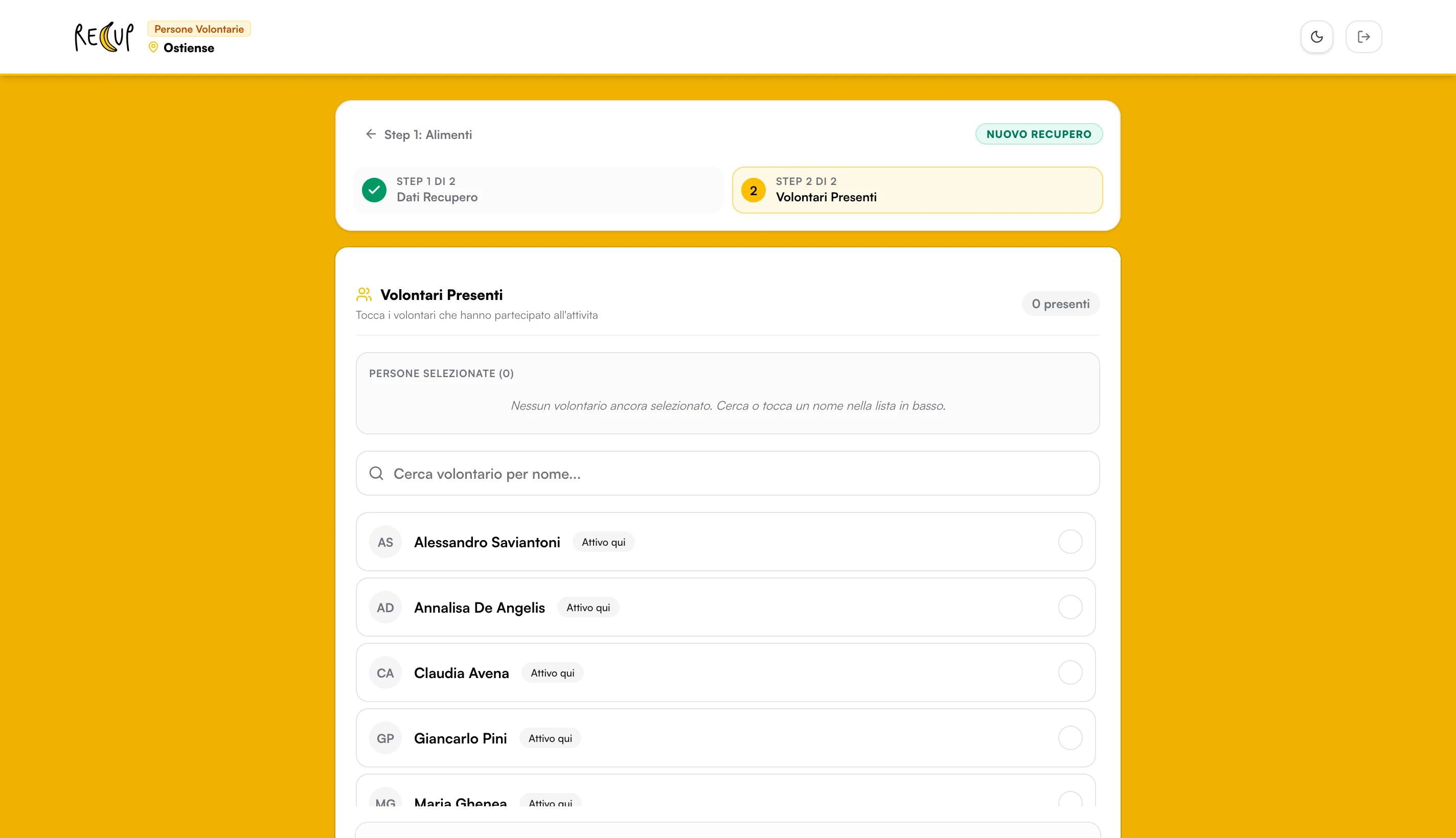
The next step records who took part. Keeping participation alongside the food data makes room for the social dimension: the time, energy and relationships that make the activity possible.
At first, I thought food and volunteers could be entered in a single form. Using the application showed us that the workflow needed separate sections. That change came from trying it in practice and understanding which sequence made the task easier.
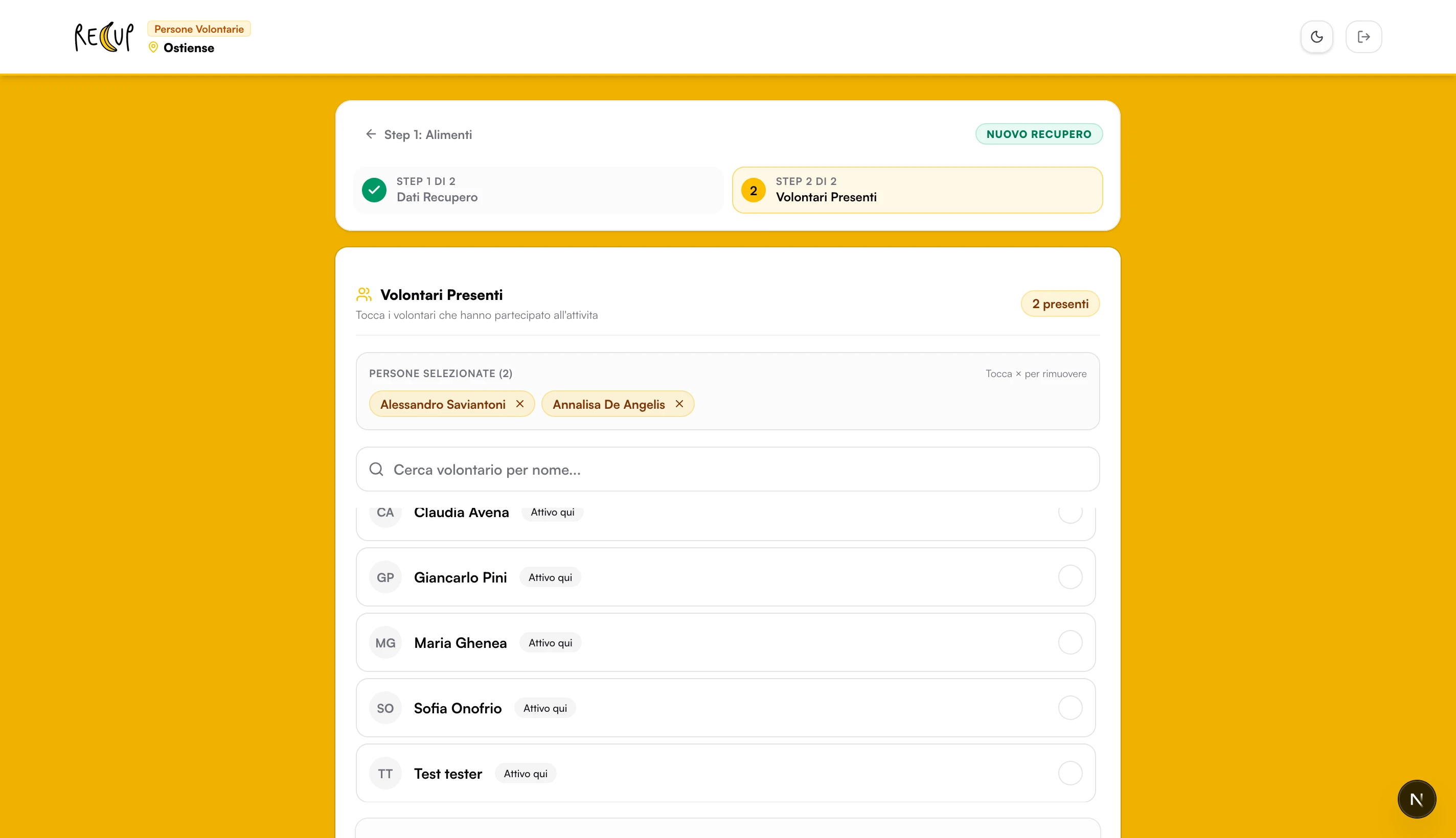
Selected volunteers remain visible in the form. The recovery and its participants are connected, so the association can look at the work as both food saved and a shared effort.
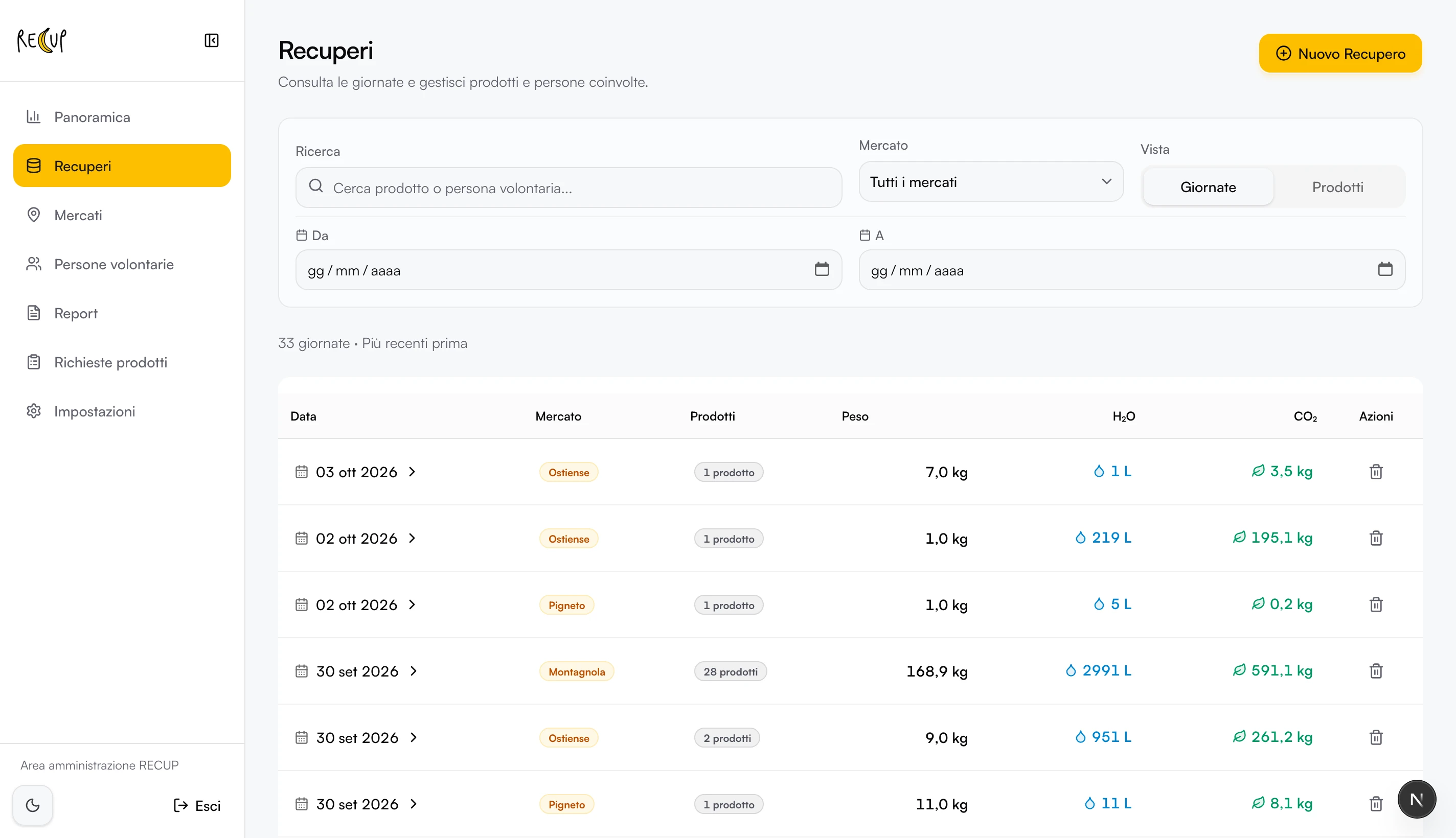
In the private admin area, recoveries can be reviewed by market and period. Weight, water and CO₂ indicators sit alongside the activity history, making it easier to follow the work over time.
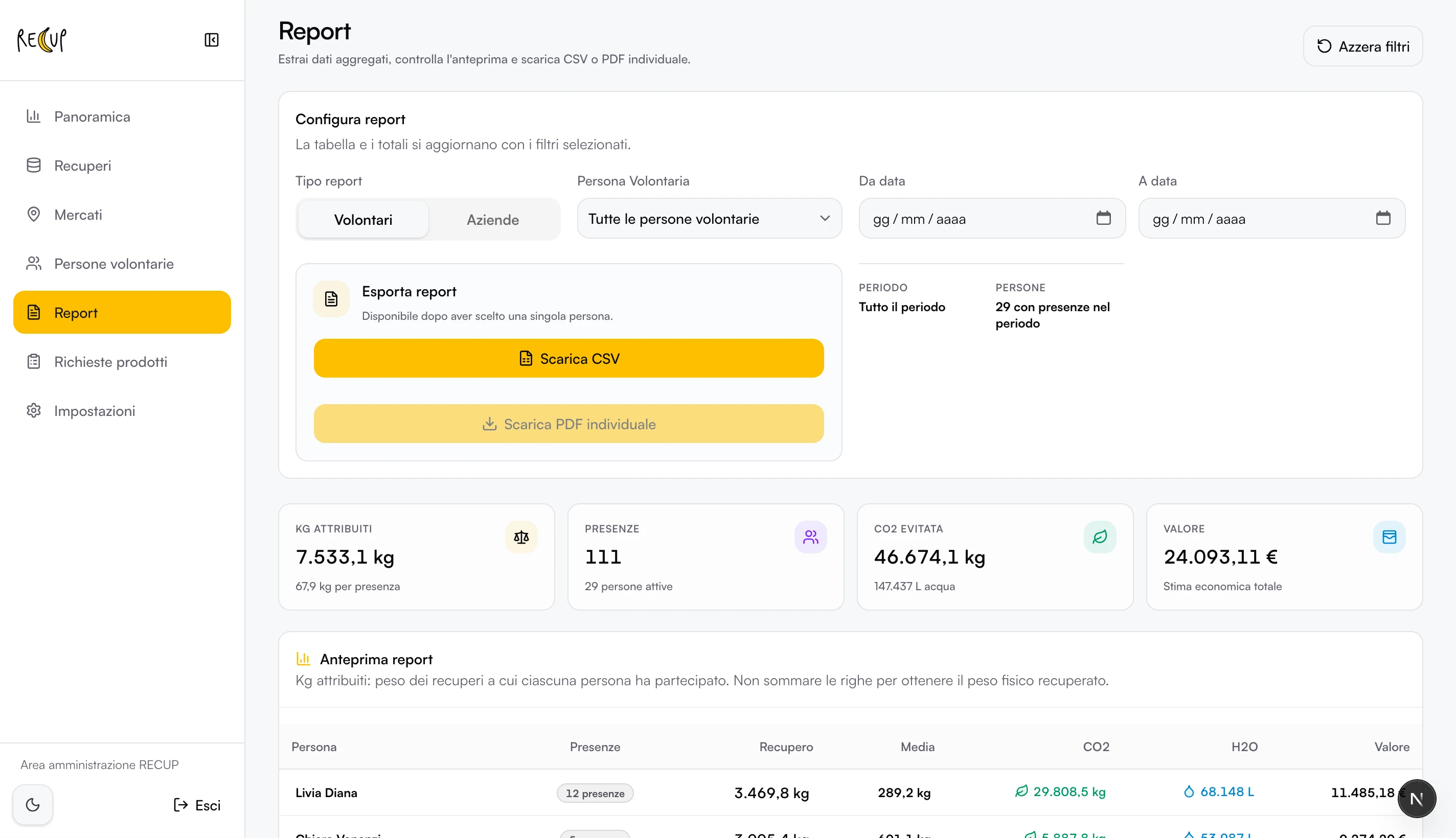
Reports bring together recovered food, attendance and environmental estimates. Filters and exports help turn daily entries into evidence the association can use to report its activities and explain their value to the community and its supporters.
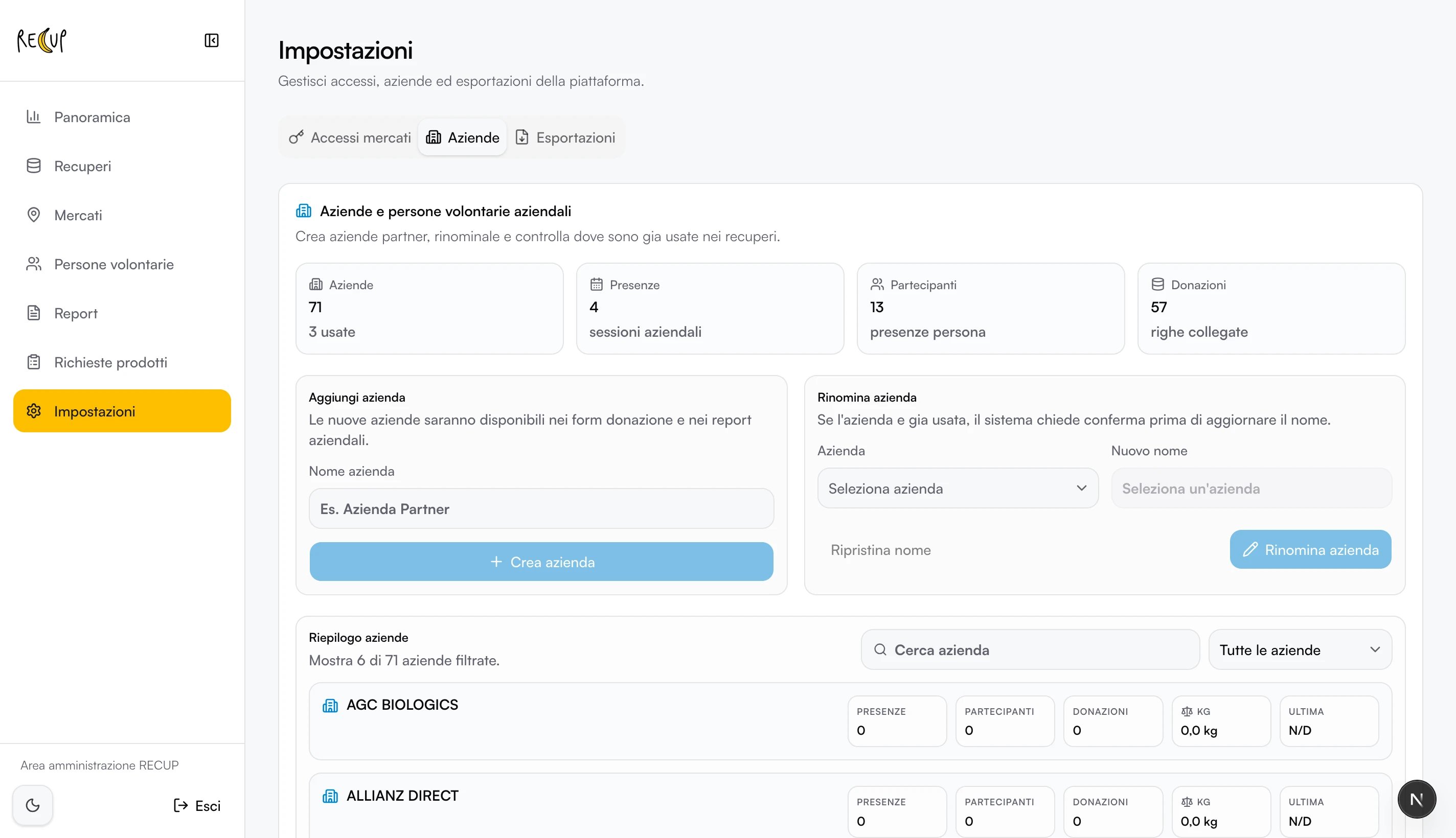
The platform also brings company participation into the picture. Connecting organisations, volunteers and recoveries helps describe the network around RECUP, alongside the kilograms and environmental indicators.
For the curious
The tools mentioned in the story, with documentation, guides and source code to help you build something of your own.
If you have a question about this project or an idea to discuss, write to me. I’m happy to share what I’ve learned.
Ask me a question